TERA Gallery - African Art and Antiquities "Altering The Way You View The World Of Art" |

Type of Object:
Dimensions:
Reference:
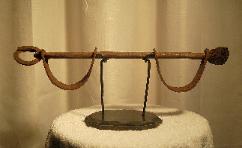
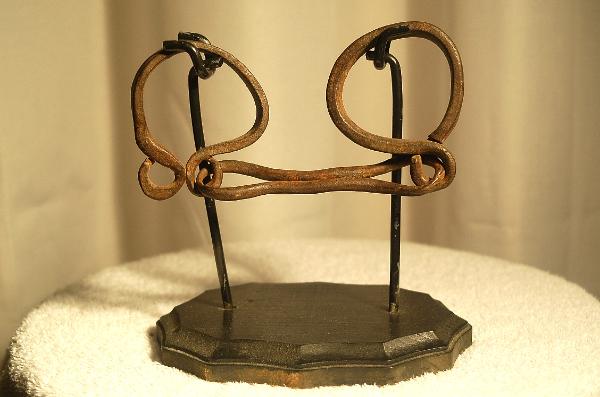
- Slave Shackles - Transatlantic
15th c.
- This is an extremely rare item used on ships coming from Africa
to control, punish and humiliate defiant captured men, women and
children slave being transported to American an other parts of the
world.
- Current study in the TERA Gallery Reading Room relates to this
object.
- When Europeans arrived along the West African coast, slavery
already existed on the continent. African slavery was more akin to
European serfdom. In the Ashanti Kingdom of West Africa, for
example, slaves could marry, own property and even own slaves.
Slavery ended after a certain number of years of servitude. Most
importantly, African slavery was never passed from one
generation to another.
- The first Europeans to come to Africa's West Coast came to
trade. The purpose of the exploration was to expand European
geographic knowledge, to find the source of prized African gold,
and to locate a possible sea route to valuable Asian spices. As
time passed this situation took a horrific turn, Africans were either
captured in warring raids or kidnapped and taken to port by
African slave traders. There they were exchanged for iron, guns,
gunpowder, mirrors, knives, cloth, and beads brought by boat
from Europe.
- "Concerning the trade on this Coast, we notified your Highness
that nowadays the natives no longer occupy themselves with the
search for gold, but rather make war on each other in order to
furnish slaves. . . The Gold Coast has changed into a complete
Slave Coast." - William De La Palma Director, Dutch West India
Co. September 5, 1705
- By the start of the 16th century, almost 200,000 Africans had been
transported to Europe and islands in the Atlantic. By 1619, more
than a century and a half after the Portuguese first traded slaves
on the African coast, European ships had brought a million
Africans to colonies and plantations in the Americas and force
them to labor as slaves. Trade through the West African forts
continued for nearly three hundred years. The Europeans made
more than 54,000 voyages to trade in human beings and sent at
least ten to twelve million Africans to the Americas.
- These shackles served to bind the captive either by the legs at the
ankles or the by the hands at the wrists. The slave could not walk
with these, so they were installed in the ship.
- Iron
Dimensions:
Reference: